Steel Beams in Dubai: Fabrication, Types, Sizes, Applications
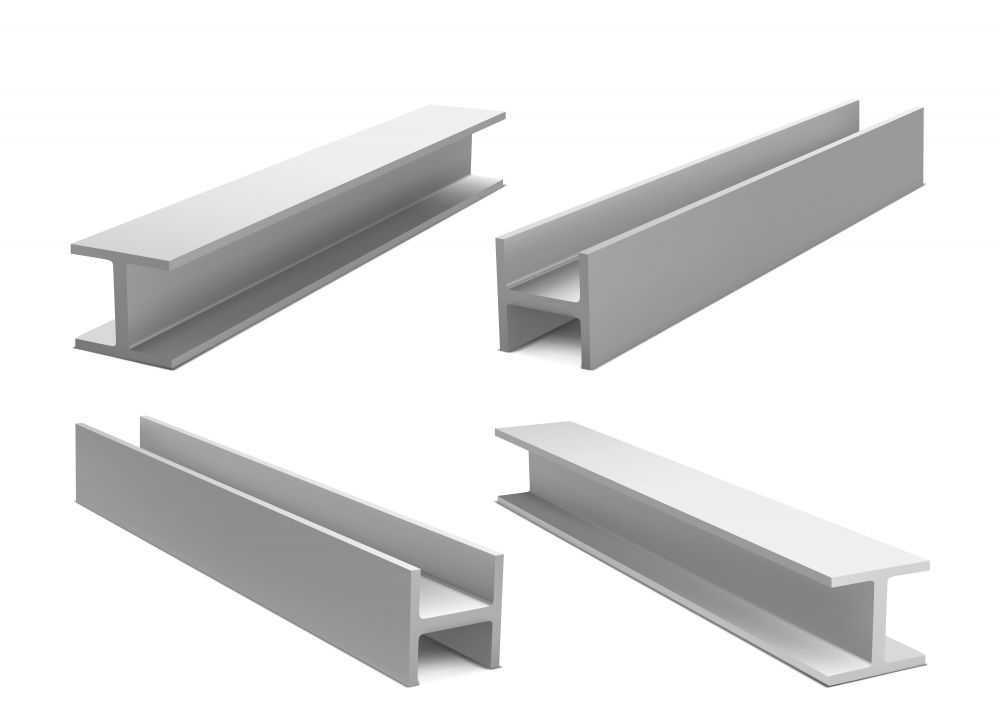
A steel beam is a horizontal load-bearing element of a building frame. It takes the weight from floors, roofs, equipment or crane runways and transfers it down to columns and foundations. In industrial and commercial construction across the UAE, steel beams serve as the backbone of warehouse frames, mezzanine floors, gantries, crane runways, floor-to-floor decks and structural reinforcements. The main types of steel beams available in Dubai include I-beams with parallel flange surfaces, wide flange beams, asymmetric beams for crane runways and beams with perforated webs to reduce weight without losing stiffness. An I-beam in cross-section looks like the letter H. It has two horizontal flanges and a vertical web between them. This shape gives maximum rigidity with minimum metal weight. Unlike a channel or an angle bar, an I-beam works equally well for vertical bending and torsion.
Standard sizes and weight
Beam depth ranges from one hundred to one thousand millimeters. Flange width goes from fifty to four hundred millimeters. Web thickness starts at four millimeters and goes up to thirty. Flange thickness runs from six to forty millimeters. Standard single beam length is between two and twelve meters. For project-specific orders, we cut beams to exact length with a tolerance of plus or minus one millimeter. Weight per meter depends directly on the cross-section. As a typical example, a beam with two hundred millimeters depth, one hundred millimeters flange width and six millimeters web thickness weighs roughly twenty kilograms per meter. A beam with five hundred millimeters depth, two hundred millimeters flange width and ten millimeters web thickness weighs about eighty kilograms per meter. Exact weight is always calculated from actual section dimensions before production begins.
Materials for beams in Dubai
For welded beam production in the UAE market, we use hot-rolled structural steel suitable for most construction tasks including warehouse frames, hangars, shopping centers and industrial workshops. For beams exposed to high humidity or outdoor conditions, the same steel receives additional anti-corrosion treatment. For crane beams under cyclic dynamic loads, we select steel with higher impact toughness. The final steel specification is always agreed with the project engineer and depends on three factors: calculated load on the beam, operating environment and insurance company requirements for the structure.
How custom welded beams are made
The process starts with cutting steel plates into strips of the required width. Cutting is done on CNC machines at a speed of one meter per minute, which keeps delivery times achievable even for large volumes. Each strip edge then goes through milling. This ensures the weld seam will be dense and uniform along the full beam length. After edge preparation, assembly begins. Strips are fixed in a jig strictly perpendicular to each other with symmetrical alignment. Next comes automatic welding in a carbon dioxide atmosphere with flux. Automation delivers a stable welding mode along the entire seam length, eliminating manual errors. Once welded, each beam goes to inspection. Every weld is tested for continuity and internal cracks. The final stage is geometric straightening. During welding, heat can deform the metal. Flanges may shift sideways and the web may curve. We straighten each beam on a dedicated press table, returning geometry to within plus or minus one and a half millimeters over six meters of length.
Who this suits
Main contractors building warehouses in Jebel Ali, hangars in Dubai Industrial Park or production facilities in Sharjah. Manufacturing companies needing crane beams for factory equipment or gantries for production lines. Private developers constructing villas with basement floors or underground parking where beams go into floor decks. Engineering offices that design frames and want to hand over drawings without losing accuracy. If you have a sketch, drawing or just span length and required load, we calculate the section and provide a proposal.
What to know before ordering
Minimum order is one metric ton or five beams, whichever requires more material. Lead time for custom fabrication is five working days from drawing approval. Delivery across Dubai and the Northern Emirates is included in the price for orders above three tons. We produce standard symmetric I-beams with parallel flanges, asymmetric beams for crane runways and beams with web perforations for utility passages or weight reduction. Anti-corrosion primer or hot-dip galvanizing is available on request for beams working outdoors or in chemically active or high-humidity areas.
How we stand behind quality
Each batch of beams comes with a mill certificate for the steel showing chemical composition and mechanical properties. The ultrasonic test report for all welds confirms every joint is sound and defect-free. We retain weld samples from each batch for three months. If questions arise during installation, we provide CNC machine cutting logs showing exactly which plates your parts came from. This is not standard practice in the UAE market, but we do it.