Metal Columns in Dubai: Fabrication, Types, Installation
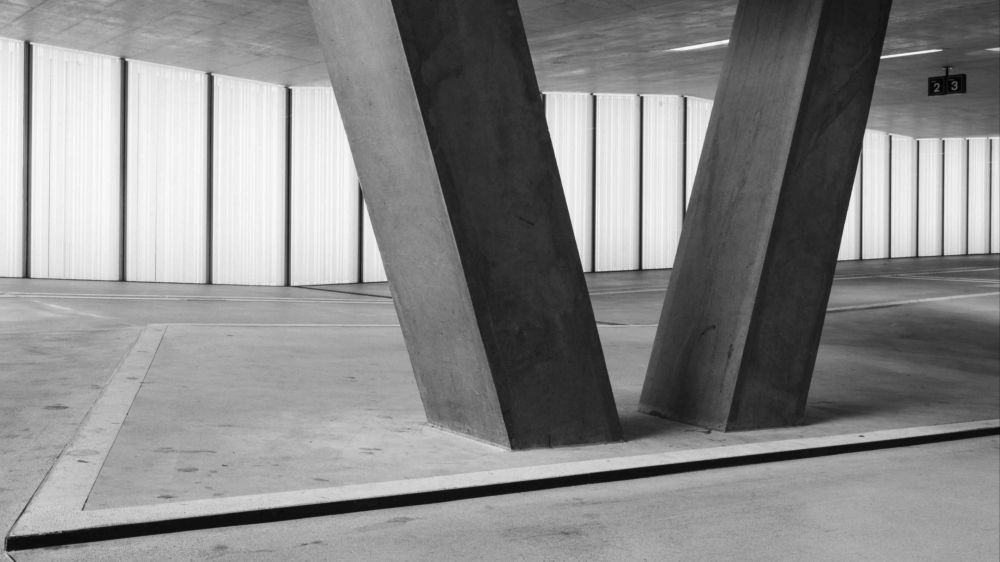
A metal column is a vertical support that takes load from floors, beams, trusses and roofs and transfers it to the foundation. Unlike a reinforced concrete column, a metal column is lighter, faster to install and allows cross section changes along the building height. In Dubai, metal columns are used in frames of industrial workshops, warehouse complexes, shopping centres, office buildings, hangars, trestles and bridges. A column carries not only a load bearing function but also an aesthetic one, as exposed steel supports become part of the architectural concept in loft and high tech styles.
Types of metal columns
By purpose, columns are divided into main and auxiliary. Main columns take the load of the entire building, with beams, trusses and floors attached to them. Auxiliary columns, called wind columns, serve to stiffen the frame and support wall panels. They do not carry vertical load from floors, only wind load and their own weight.
By cross section type, columns are solid or laced. Solid columns have a continuous cross section in the form of an I-beam, tube or rectangular profile. Laced columns consist of two or three branches connected by battens or lattice. Laced columns are lighter for the same load capacity but more complex to fabricate.
By cross section shape, there are three main types. I-beam columns with an H shaped section are the most common type for building frames. Rectangular columns made from tubes or welded boxes are used where aesthetics and hidden routing of utilities inside the column matter. Round tubular columns are used for light canopies, lighting supports and decorative elements.
By cross section variation along height, columns are either uniform or stepped. Uniform columns are suitable for buildings up to ten metres high with loads up to twenty tonnes. Stepped columns have different cross sections in the upper and lower parts and are used for buildings higher than ten metres with loads over twenty tonnes. The stepped shape provides increased bending stability when crane equipment is operating.
By load application, columns are divided into centrally loaded and eccentrically loaded. Centrally loaded columns take load strictly along their axis. Eccentrically loaded columns work under load applied away from the axis, which occurs when crane runways or one sided floors are attached.
Column construction
A column consists of three main elements. The shaft is the vertical body of the column, transmitting load from top to bottom. The shaft constantly works in compression, and occasionally in compression with bending. The cap is the upper part of the column that supports beams, trusses or floors. The cap can be pinned or rigid depending on the type of connection to the structures above. The base is the lower part of the column that transfers load to the foundation. The base is made wider to distribute pressure evenly over the concrete. The base is fixed to the foundation with anchor bolts.
What columns are made from
For solid columns, hot rolled I-beams are used with flange widths from one hundred to four hundred millimetres and section heights from two hundred to eight hundred millimetres. For light columns, square hollow profile tubes with side dimensions from eighty to two hundred millimetres and wall thickness from four to ten millimetres are used. For laced columns, the branches are made from channels or angles, and the connecting lattice is made from smaller angles. After fabrication, all steel elements undergo sandblasting, priming and powder coating. For columns operating outdoors or in high humidity conditions in Dubai, hot dip galvanising is offered.
How columns are designed
Design begins with three numbers: column height, load on the column in tonnes, and the type of connection to the foundation and to the beams. Based on this data, the engineer selects the shaft cross section. The higher the column, the larger the required I beam section for the same load, because the risk of buckling increases. The greater the load, the thicker the web and flanges must be. After section selection, the base is calculated: base plate dimensions, number and diameter of anchor bolts, and the presence of stiffening ribs between the plate and the shaft. For eccentrically loaded columns, the moment from crane load or one sided floor is added to the calculation. All calculations are performed taking into account the self weight of the column, the live load from the building and the wind pressure according to the Dubai wind map.
How columns are fabricated
Cutting. The I-beam, tube or channel is cut to the dimensions shown on the drawing using a band saw or plasma cutter. Length tolerance is plus or minus one millimetre. The ends are milled for tight fit of the cap and base.
Part preparation. The base plate is cut from steel plate with a thickness of twenty to fifty millimetres. Holes for anchor bolts are drilled in the plate. Stiffening ribs between the plate and the shaft are cut from plate with a thickness of ten to twenty millimetres. The cap is made from plate and ribs or from a section of wide flange I-beam.
Assembly and welding. The shaft is placed vertically on an assembly jig. The base with stiffening ribs is welded to the bottom end. The cap is welded to the top end. All welds are made using a semi automatic welder in a carbon dioxide atmosphere. The welds at the connection of the shaft to the base and cap are double sided and continuous around the entire perimeter.
Quality control. Every weld undergoes visual inspection for cracks, porosity and lack of fusion. The welds on the base and cap are inspected by ultrasound. The finished column is checked for verticality on a test stand. Deviation from perpendicularity of the base to the shaft axis must not exceed one millimetre per metre of height.
Corrosion protection. The finished column is sandblasted to clean metal. Then primer is applied in one layer followed by powder coating. Total coating thickness ranges from eighty to one hundred microns. For columns in open yards or areas with high humidity, hot dip galvanising by immersion is used.
Column installation
Installation begins with acceptance of the foundations. Layout axes must be marked on the foundation and anchor bolts must be installed. Bolt threads are cleaned of concrete and lubricated. The column base plate is cleaned of dirt and rust. The column is lifted to the installation site by crane. The column is slung around the cap or using special lifting lugs. During lifting, the column is held against swinging by two tag lines. The column is guided onto the anchor bolts and lowered onto the foundation. The base sits onto levelling nuts. The column is aligned vertically using a theodolite or laser level. Vertical deviation must not exceed two millimetres over the full height. After alignment, the nuts are tightened and a cement grout is poured under the base for full contact with the foundation. Then bracing between columns is installed for frame rigidity, and only after that are beams and trusses placed onto the columns.