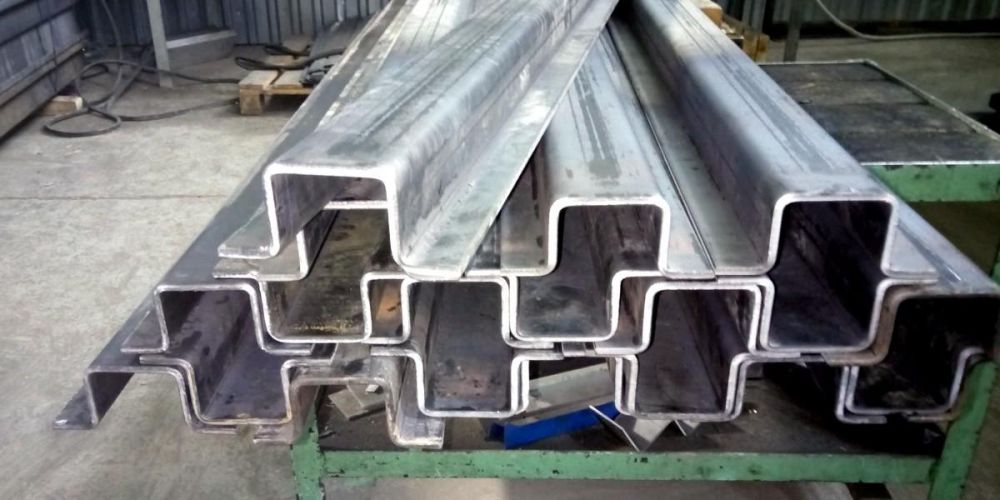
Bent Channel Production in Dubai
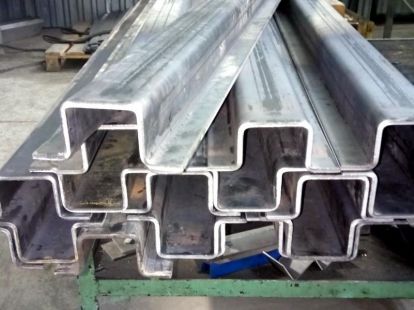
A bent channel is a metal profile with a C-shaped or U-shaped cross section, manufactured by bending steel sheet on roll forming machines. Unlike a hot rolled channel, which is formed from a heated billet, a bent channel is produced from cold or preheated sheet without removing metal. This provides two main differences: uniform wall and flange thickness along the entire length, and lower cost due to the absence of trimming waste. In Dubai, bent channels are used not only in building frame construction but also in mechanical engineering, railcar manufacturing, conveyor production, racking systems and automotive trailers.
Where bent channels are used
In construction, bent channels are used for lightweight prefabricated building frames, hangars, commercial pavilions and canopies. They serve as purlins for roof attachment, truss chords and diagonal braces between columns. In mechanical engineering, bent channels are used for machine frames, press beds, guides for moving parts and equipment housings. In warehouse equipment, bent channels form the basis of racking systems, pallet frame structures and mezzanine floors. In the automotive industry, they are welded into trailer frames, semi trailer frames and van truck bodies. In railcar manufacturing, bent channels are used for railcar and container frames.
How a bent channel differs from a hot rolled channel
The wall and flange thickness of a bent channel is uniform along the entire profile length. On a hot rolled channel, the flanges thicken toward the edges and the inner faces of the wall have slopes. The corners of a bent channel have a slight radius formed during bending. Hot rolled channels have sharper corners but with an internal radius determined by the roll shape. A bent channel can be manufactured with almost any height and flange width to custom dimensions. Hot rolled channels are only available in standard profile sizes with fixed section numbers. A bent channel is lighter for the same load capacity because the metal is not concentrated in thickened areas but is distributed evenly.
What dimensions of bent channels we produce
Wall height of the bent channel ranges from fifty to three hundred fifty millimetres. Flange width ranges from thirty to one hundred fifty millimetres. Metal thickness ranges from one and a half to eight millimetres. Single blank length ranges from two to twelve metres. Cutting to exact length with a tolerance of plus or minus one millimetre is available on request. The internal corner radius is no more than three to four times the metal thickness. The thinner the sheet, the smaller the bend radius. The flange angle relative to the wall is ninety degrees, but angles from seventy five to one hundred five degrees can be produced upon customer request.
What steel we use for production
Carbon steel of ordinary quality is used for bent channels. This is hot rolled or cold rolled sheet that bends well without cracking and produces a clean bend line. The sheet thickness and its mechanical properties affect the minimum bend radius. The higher the steel strength, the larger the radius required to prevent the metal from cracking on the outside of the bend. For outdoor use or in high humidity conditions in Dubai, we use steel with enhanced corrosion resistance or apply coating after bending. Galvanised steel is available upon customer request, in which case the bent channel requires no additional painting and will not rust even in open air.
How production works
Production begins with a steel coil or sheet metal. The coil is placed on a decoiler, and the sheet is fed into a straightening station where flatness defects and waviness are removed. The sheet then passes through a sequential series of roll forming stands. Each pair of rolls gradually bends the edge of the sheet to a specific angle. After passing through all stands, the flat sheet is transformed into a C-shaped or U-shaped profile with the specified wall height and flange width. At the end of the line, a flying cut-off press or guillotine shear cuts the finished channel to pre-set lengths without stopping the process. The roll forming speed on modern CNC machines reaches thirty metres per minute.
Quality control during production
At the input stage, sheet thickness and mechanical properties are checked against the manufacturer's certificate. During the bending process, the operator monitors profile symmetry and the absence of ripples on the flanges and wall. The finished channel is checked for three parameters. First is wall height, with a tolerance of plus or minus half a millimetre. Second is flange width, with a tolerance of plus or minus half a millimetre. Third is the bend angle, with a tolerance of plus or minus one degree. The external corner radius is visually inspected for cracks, laminations or tears in the metal. Each batch is accompanied by a dimensional inspection report. If the client requires a steel certificate specifying the chemical composition, we provide copies from the sheet manufacturer.
Advantages of bent channels over other profiles
A bent channel is lighter than a hot rolled channel with the same profile height. This reduces the overall weight of the structure and the load on the foundation. The cost of a bent channel is lower because there is no waste from trimming burrs and no energy consumption for heating the metal to rolling temperature. A bent channel can be made with different flange widths, for example a left flange wider than the right flange, if required for a specific structure. A bent channel has a smooth surface without mill scale, making it easier to paint without additional cleaning. The length of a bent channel is limited only by the length of the original sheet and transport capabilities. We produce channels up to twelve metres long without joints.
What to know when ordering
Minimum order is one tonne of finished profile in a single size. Production time starts from three working days after confirmation of the dimension drawing. Delivery across Dubai is included in the price for orders of three tonnes or more. Collection from our warehouse is available any day. For orders under five hundred kilograms, the price per tonne will be higher because reconfiguring the line for a different profile size takes time and requires changing the roll stands. We recommend ordering standard stock sizes if they suit your task. Custom dimensions are made to order. All finished profiles are packed into bundles and strapped with steel banding for convenient unloading and storage.
How to start
Call or send a message on WhatsApp. Provide the wall height, flange width, metal thickness and required length. If you have a drawing of the assembly or a sketch, send it. In return, you will receive the price per tonne and per linear metre, as well as the production timeline. Once approved, we start line setup within twenty four hours. You can visit the workshop and watch the bending process. Samples of finished channels are provided free of charge for quality approval before large orders.