AREA, REAL ESTATE AND RENOVATION SPECIFICS
Downtown Dubai: why renovation here is a different story
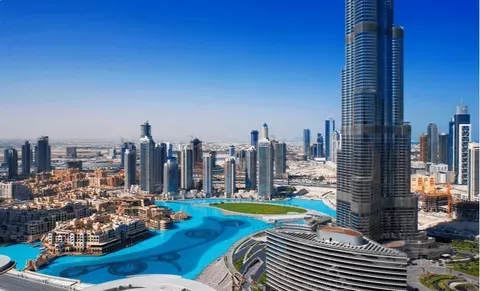
Downtown Dubai is not just an address. It is the area with the highest concentration of premium residential towers in Dubai: Address Residences, Burj Vista, Opera Grand, Il Primo, The Address Boulevard, Vida Residences and dozens of other Emaar Properties developments. This area is home to apartments with views of the Burj Khalifa and the Dubai Fountain, which are valued both for personal living and for short-term rentals. This determines the basic requirements for renovation: high finishing standards, strict community management rules and increased control by Emaar Community Management. Renovation in Downtown is not just finishing work, it is a managed project in a regulated environment.
Types of real estate in Downtown Dubai and their features
The area predominantly offers apartments in the format of studios, 1BR, 2BR, 3BR and penthouses. Villas are practically absent here — this is a high-rise zone. A typical studio layout is 45–55 m², one-bedroom apartments are 75–95 m², two-bedroom apartments are 110–150 m², three-bedroom apartments are 160–220 m². Penthouses in Il Primo and Address Sky View reach 700 m² and above. A feature of most properties is open layouts, floor-to-ceiling panoramic windows, and high-quality base finishing by the developer. This means that most owners do not carry out a full gut renovation but rather a level‑by‑level renovation: replacing flooring, kitchen units, bathrooms, custom furniture and lighting design.
Why renovation in Downtown is more expensive than the Dubai average
Three factors drive the higher cost of renovation in this particular location. The first is logistics: delivering materials to high‑rise buildings with limited lift operating hours and a mandatory contractor security deposit increases overheads by 15–20%. The second is material requirements: Emaar Community Management imposes requirements on the types of flooring, noise levels during installation and the use of only certified contractors. The third is the cost of the design project: owners of apartments in Downtown typically want an interior that matches the property's level — that is, at least contemporary premium or luxury, which in itself implies Italian furniture, concealed storage systems and integrated smart solutions.
Which properties are most often renovated in Downtown
In practice, a typical client in Downtown falls into one of three categories. The first is an investor who has bought an apartment for short‑term rental via Airbnb or Vacation Homes and wants a "photogenic" interior to boost their listing rating. The second is a new resident who has moved to Dubai and is furnishing a home for themselves, typically with a demand for functionality and quality. The third is an investor reselling a property after renovation: in Downtown, well‑renovated apartments sell for 12–18% more than similar properties without renovation, making renovation ROI here one of the best in the city. Understanding your category directly influences the choice of budget and style.
RENOVATION COST, POPULAR STYLES AND REAL CASES
How much does an apartment renovation cost in Downtown Dubai in 2026
The cost of renovation in Downtown Dubai is calculated per square metre or for the entire property. In 2026, market rates are as follows: cosmetic renovation (replacing flooring, painting, plumbing fixtures) — from 300 to 600 AED per m²; full renovation with partial reconfiguration, replacement of kitchen and bathrooms — from 800 to 1,500 AED per m²; complete luxury fit-out with a design project, Italian furniture, smart home and custom solutions — from 2,000 AED per m² and above. For a typical one-bedroom apartment of 85 m², a quality renovation for rental purposes will cost 80,000–120,000 AED, while a full designer project will cost from 180,000 to 350,000 AED. A design project alone costs from 15,000 to 60,000 AED depending on complexity.
Price ranges by apartment type in Downtown
Below are approximate cost ranges for renovation for the most common apartment formats in Downtown Dubai for 2026. Studio (45–55 m²): cosmetic — 20,000–35,000 AED, full — 50,000–90,000 AED, luxury — from 120,000 AED. 1BR apartments (75–95 m²): cosmetic — 30,000–55,000 AED, full — 75,000–130,000 AED, luxury — from 180,000 AED. 2BR apartments (110–150 m²): cosmetic — 45,000–80,000 AED, full — 110,000–200,000 AED, luxury — from 280,000 AED. 3BR apartments (160–220 m²): full — 160,000–300,000 AED, luxury — from 400,000 AED. Penthouses are calculated individually; the base cost of a luxury project starts from 1,500,000 AED. All amounts are stated excluding furniture unless otherwise specified.
Popular interior styles in Downtown Dubai
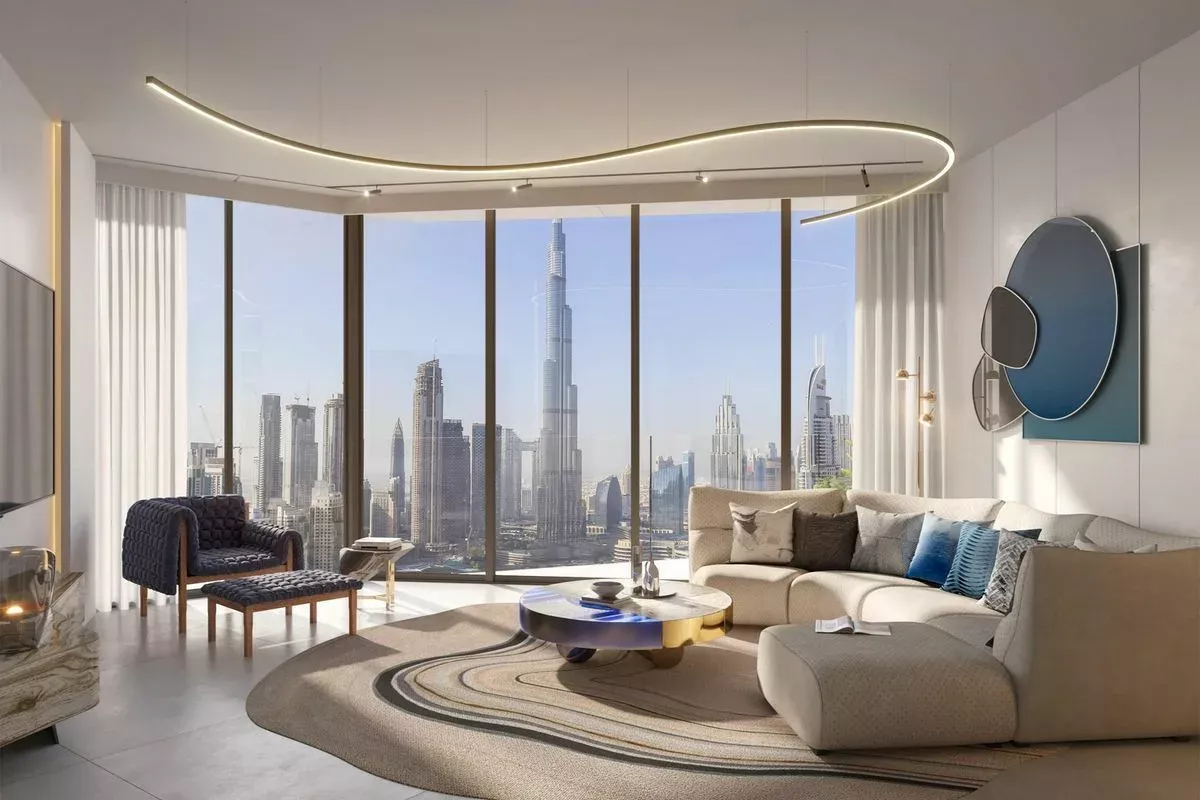
Among property owners in Downtown Dubai, several style directions consistently dominate. The most popular is contemporary minimalism with a neutral palette — white, beige, grey, warm sand — combined with natural wood, marble and matte metal details. This style is in demand among investors for rentals: it visually expands the space, is photogenic and does not age. The second most popular style is contemporary luxe: open layouts, concealed lighting, panoramic views as an interior element, custom furniture and art objects. The third direction is Arab modernism, combining geometric patterns, metallic brass details, textured plaster and natural stones — popular among local buyers and affluent residents from the MENA region. Smart home integration (automation of lighting, climate, security via Control4, Lutron or KNX systems) has become standard for projects with a budget of 200,000 AED and above.
Renovation stages: from idea to project handover
Renovating an apartment in Downtown Dubai consists of sequential stages, each of which cannot be skipped. The first stage is inspection and snagging: before any work begins, a snagging inspection of the current condition of the apartment must be carried out, documenting the condition of the floors, walls, plumbing and electrics. The second stage is the design project: concept development, 3D visualisation, working documentation with plans, MEP (mechanical, electrical, plumbing) drawings and material specifications. The third stage is approvals: obtaining an NOC from Emaar, permits from Dubai Municipality and DEWA. The fourth stage is demolition and rough works. The fifth stage is finishing, furniture installation and handover with a snag list. The typical timeline from contract signing to key handover for a full renovation of a 2BR apartment is 10–14 weeks.
Real case: renovation of a 2BR apartment in Address Boulevard
An illustrative example is the renovation of a two-bedroom apartment of 128 m² in the Address Boulevard tower. The objective: renovation for vacation home rental with a target rate from 1,200 AED per night. The project budget was 195,000 AED, including the design project, materials and works. The style was contemporary luxe with a view of the Burj Khalifa as the central element. Solutions: panoramic mirrors in the living room, a kitchen unit with a Silestone quartz island, a hammam-style bathroom with Turkish Marmara marble, concealed lighting in all zones, and smart lighting on the Lutron system. Implementation time: 11 weeks. Final result: in the first 3 months after listing on Airbnb, occupancy was 82%, with an average rate of 1,350 AED. The ROI from the renovation paid back within 14 months.
PERMITS, DOCUMENTS, CONTRACTORS AND FAQ
Renovation permits in Downtown Dubai: what is mandatory
Downtown Dubai is managed by Emaar Properties — one of the largest developers in the UAE. This means that any renovation work beyond cosmetics requires two‑level approval: first an NOC from Emaar Community Management, and then, if necessary, a permit from Dubai Municipality. According to 2026 rules, the mandatory approval procedure via the Emaar One portal with UAE PASS authentication is required for: demolition or relocation of partitions, changes to the layout of wet areas (kitchen, bathrooms), replacement of electrical and plumbing connection points, any changes to the HVAC system, as well as reconfiguration involving the opening of openings. Cosmetic works — replacing flooring, painting, installing new light fittings without altering the wiring — are permitted under a simplified notification procedure to building management.
How to obtain an NOC from Emaar: step‑by‑step process
The procedure for obtaining an NOC from Emaar Community Management in 2026 has been fully digitised. The owner or an authorised contractor submits an application via the Emaar One portal with a verified Home ID and UAE PASS. The application must include: the Title Deed, technical drawings showing the existing and proposed layout, a method statement, the contractor's insurance policy and proof of their DED licence. The administrative fee for review is 2,500 AED + VAT for works classified as major works. The refundable deposit is generally from 2,000 to 5,000 AED depending on the scope of work. The technical review period with 100% correct documentation is 4–7 working days. The most common reason for rejection and re‑submission is incorrect MEP drawings or a mismatch between the load and the unit's DEWA limits.
Dubai Municipality and DEWA requirements
After obtaining an NOC from Emaar, for structural and MEP changes, approval must be obtained from Dubai Municipality via the DBPS (Dubai Building Permit System). The application is submitted by a registered architectural consultant or design firm with a valid DM classification. The document package includes: architectural and MEP drawings, structural calculations if load‑bearing elements are altered, and compliance notes with the UAE building code. The review period is 5–15 working days; re‑submission following comments resets the clock. Fines for starting work without a permit from 2026 start at 5,000 AED under Law No. 7 of 2025 and may include an order for the forced demolition of completed works. DEWA approval is mandatory when changing the electrical load or water supply points.
Timing of renovation works in Downtown Dubai
Working hours on construction sites in Emaar Communities are regulated more strictly than in non‑regulated areas of Dubai. According to Dubai Municipality rules, noisy works are permitted on weekdays from 7:00 to 20:00, and on Saturdays from 9:00 to 20:00. Fridays and public holidays — noisy works are prohibited. Emaar Community Management for most Downtown towers applies additional restrictions: demolition and impact works are only permitted from 9:00 to 17:00 on weekdays. Weekend works are generally limited to quiet activities — finishing, painting, installation. Violating the timing incurs a fine of 500 to 2,000 AED per report to Dubai Police, plus a project suspension of 2–3 working days. Experienced contractors take these restrictions into account when scheduling and do not promise timelines that are physically impossible under this format.
How to choose a contractor for renovation in Downtown Dubai
Choosing a contractor is a key factor in the success of a renovation in Downtown. Minimum vetting criteria: a valid DED (Dubai Department of Economy and Tourism) licence and, where necessary, registration with Dubai Municipality for permit‑related works; confirmed experience specifically on Emaar properties with a portfolio of at least 5 completed projects in high‑rise towers; the contractor's insurance policy — a mandatory requirement of Downtown building management for site access; a transparent quote with an itemised breakdown of works and materials without hidden escalation clauses. Red flags: a price per m² significantly below market without explanation; refusal to provide a licence; the absence of a written contract with a stage‑by‑stage payment schedule and warranty obligations. It is recommended to request at least three quotes from different contractors based on a single scope of work.
FAQ: frequently asked questions about renovation in Downtown Dubai
Is it possible to carry out renovations without approvals if it is only cosmetic? Cosmetic works — replacing flooring, painting walls, installing light fittings without altering the wiring — are permitted under a simplified notification procedure to building management without a full NOC. However, even for replacing tiles in wet areas, some Downtown towers require notification and contractor registration. Always check the specific requirements of your building with the building manager before starting work.
How long does Emaar NOC approval take? With a complete set of documents, the technical review takes 4–7 working days. Including drawing preparation and addressing typical comments, a realistic timeline from submission to receiving the NOC is 3–5 weeks. If the project additionally requires Dubai Municipality approval, the total approval period can be 6–10 weeks.
Do I need to pay a deposit to the contractor? Market practice is stage‑by‑stage payment: 30% advance upon contract signing, 30–40% upon completion of rough works, and the balance upon handover. Never pay 100% upfront, even if the contractor offers a "discount for full prepayment".
Can I change the layout of an apartment in Downtown? Technically — yes, upon obtaining the relevant permits. However, most Downtown towers are Emaar properties with heights of 40 storeys or more. Any alteration to load‑bearing structures requires structural calculations from a licensed engineer. Relocating wet areas is generally approved provided the "wet over wet" principle is respected.
Does an unapproved renovation affect the sale of an apartment? Yes, and seriously. The DLD (Dubai Land Department) may, when registering a transaction, identify a discrepancy between the actual layout and the declared layout. This can block or significantly delay the transaction and oblige the seller to restore the property to its original condition at their own expense or obtain retroactive approval — a process that is longer and more costly than obtaining approval in the first place.