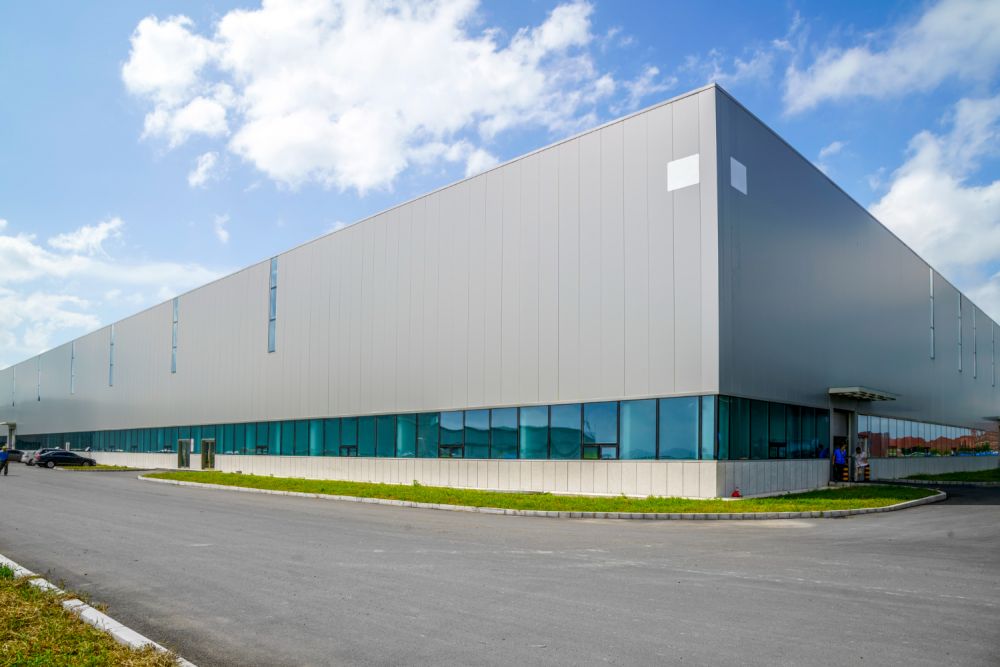
Warehouse Construction in Dubai: Prefabricated Metal Structures
Our company builds warehouse complexes and individual storage facilities using prefabricated construction technology. Project timelines range from two to three weeks to several months, depending on the complexity and scale of the facility. We manufacture all metal structures ourselves at our own factory in Dubai. We have our own designers, construction teams and specialized equipment. This reduces financial costs, shortens construction time and increases the reliability of the finished building.
What is included in turnkey warehouse construction
Work on an order begins with soil analysis and project preparation. The project is then agreed with the client, and a package of documentation is prepared for the Dubai Municipality or the free zone management company. Taking into account future loads and soil conditions, the type of lightweight foundation is determined, whether strip, pile or slab. Site preparation and foundation pouring are carried out. In our workshop, we manufacture columns, trusses and other metal frame elements. On the prepared site, we assemble load-bearing structures, cladding and built in elements such as windows, gates, roofing and corrugated sheeting. Lighting and other utility systems are installed. Interior finishing is carried out, and partitions and shelving are installed, which we also manufacture ourselves. Depending on the project and the client's requirements, the scope of work can be expanded or reduced. For example, we can build access roads and landscape the surrounding area.
Why it is profitable to order warehouse construction from us
We have extensive experience in constructing facilities of various configurations and sizes, including large warehouse complexes in Dubai, Abu Dhabi, Sharjah and other emirates. We build insulated energy efficient warehouses and economical cold storage hangars clad with sandwich panels, corrugated sheeting and other modern materials. We ensure the necessary internal microclimate taking into account the heat and humidity of the UAE. When each stage is handled by a separate contractor, delays are inevitable. When we work on a turnkey basis, all processes run continuously and in parallel. While frame components are being manufactured in the workshop, foundation work is carried out simultaneously on site. The facility is built from scratch in minimum time. The cost is fixed in the contract and does not change during the process. Estimates are free and flexible, and payment is made in stages. There are no intermediary markups because we have our own specialists, equipment and production facilities. Our prices are below the UAE market average. Quality is of the highest standard. Our prefabricated buildings are almost as durable as permanent structures. The minimum service life is fifty years, yet they pay for themselves much faster.
Types of warehouses and their design features
In the past, each organization built its own warehouse facilities using whatever materials were available. Such structures could not be called warehouses in the full sense of the word. The situation changed when construction technology based on metal frames began to be actively used in the UAE. This method significantly reduced costs, making it affordable even for small companies to build their own warehouse. To design a modern warehouse, it is necessary to understand exactly what types of goods will be stored in the facility. If the warehouse will store machinery and equipment, the focus is on protection from moisture and temperature fluctuations. For goods sensitive to heat, a facility with a cooling system is required. When it comes to agricultural products, an efficient ventilation system must be provided. Cold storage warehouses are equipped with modern cooling units capable of operating when outside temperatures exceed forty degrees.
Warehouse classification in the UAE
Warehouses in Dubai and other emirates are divided into several categories depending on their characteristics and equipment. Class A is a single storey building with a height of at least eight metres. Mandatory requirements include a modern fire suppression system, security alarm system, dust free floor coating and temperature control capability. Such warehouses are intended for storing valuable goods, including pharmaceuticals and electronics. Class B is similar in characteristics to Class A, but the building can be multi storey. This allows the same usable area to occupy a smaller plot, reducing the overall cost of the project. Class C has a building height not exceeding eighteen metres. It can be used for storing any type of material goods without strict climate requirements. Class D is a hangar type facility without active cooling. It is used for storing machinery, construction materials and goods that are not sensitive to temperature. The cost of construction directly depends on the warehouse class.